Thursday, 16 May 2019

A life without fear


One day, Buddha was walking through a village. As he was walking down the street, a very angry and rude young man came up and began insulting him, saying all kind of rude words. He was shouting a lot of abuse at Buddha, saying "You're a disgrace, you're a scam! Who do you think you are? Going around, teaching other people how they should live their lives. You think you're some sort of Master or something?"

Buddha was not upset by these insults. He carried on walking and the more Buddha would carry on walking, the more frustrated this man would get, until he finally approached him and asked him “what's wrong with you? Why are you not reacting?” Instead, he asked the young man, “Tell me, if you give a gift to somebody, and that person does not accept it, to whom does the gift belong to?”

The young man was surprised to be asked such a strange question and answered, “I don't get why you're asking these stupid questions. It would belong to me, because I bought the gift.”

The Buddha smiled and said, “That is correct. And it is exactly the same with your anger. If you become angry with me and I do not get insulted, then the anger falls back on you. You are then, the only one who becomes unhappy, not me. All you have done is hurt yourself. It doesn't matter how angry, how frustrated you are, you can say whatever you like but if I don't accept your words, that anger, that frustration only belongs within you.”

I wanted to bring this story here because I’ve recently had the occasion to experience something that proved to me this is a very true and practical tool to apply in everyday life, not only a nice story.

The story I want to share with you next, happened in the same day that I was experiencing with the “How does it get any better than this” mantra. I was in a kind of a joyous flow, moving about with my day, experiencing little miracles along the way. In the middle of all those beautiful synchronicities, something dissonant and puzzling happened.

I got off bus number 9 at Monks Cross and I had about 10 more minutes to walk to my next meeting. My inner state was good, joyful, I was grateful for the gentle breeze blowing through my afro, whilst the sun was kissing my face.

I was just walking past the Shopping Park, when I saw a man in his thirties, dressed in a suit and a long, black coat. I noticed he was starring at me. I looked at him, briefly trying to figure out if I knew him from somewhere. He didn’t seem familiar, and I just continued walking, despite him starring. The moment I passed by him and I couldn’t see him anymore I heard a very rude, sexual swearing. He said, "I'd fuck you and pull you by that sexy hair. Wouldn't you like that, you cunt?"

We, Romanians, have a very colourful and rich vocabulary when it comes to swearing. I am not a prude. I like making jokes about that, but this one was really strong, out of the blue and the tone of his voice was very determined. He was not joking. I didn’t stop or even look back. The first thoughts that came to my mind were : “He must be really troubled or nuts….he must be in a deep suffering or need if he just said that… .” And I admit, for a few seconds I was afraid he might follow me. But he didn’t.

Society tends to put the blame on us because, as women, when we’re targeted with that kind of “gifts”, they tend to think it has something to do with us. "What was it in your energy that attracted this "gift"? What did you do? What did you say? Maybe you dressed too provocatively, maybe you have the wrong attitude walking down the street, maybe your hairstyle should be more humble"... and the whole lot of deprecating stuff they say to us.

He didn’t seem like a poor, drunk or drugged homeless person that you sometimes see in the streets yelling and swearing at everyone. He seemed like what we usually accept as a “normal” working, person. But who knows? I will never know what his problem was and I don't intend to. It’s poor, misguided people that have no other thing better to do than be jerks.


The thing I want to stress here is that, just like in the story of the Buddha, I didn’t accept his “gift”. I actually felt sorry for him. I didn’t feel like his words had anything to do with me, although he was looking at me and he addressed them to me.

And looking back, he actually gave me something precious: he gave me the opportunity to experience for a tiny bit, what that Buddha story said. And I felt great noticing that I didn’t allow that to change my vibe, to change the joyous state I was in. I continued going about with my day, asking the Universe, “how does it get any better than this” and I continued enjoying the little miracles that kept appearing in my way.

I feel that every day we have so many people around us, bringing us gifts that are sometimes hidden in an ugly package. Or some are nicely packed, but inside, there are rotten apples.

If it’s one thing I would like you to take out of this, is to remember that you always have a choice. You can accept or not accept these gifts. As simple as that. It all begins and ends in your mind. What you give power to has power over you, if you allow it. You decide. 

Monday, 6 May 2019

What is attachment and how does it impact our lives?

"Ryokan, a Zen master, lived the simplest kind of life in a little hut at the foot of a mountain. One evening a thief visited the hut only to discover there was nothing in it to steal. Ryokan returned and caught him: ‘You may have come a long way to visit me’ he told the prowler,’ and you should not return empty-handed. Please take my clothes as a gift.’ The thief was bewildered. He took the clothes and slunk away. Ryokan sat naked, watching the moon. ‘Poor fellow’, he mused, ‘I wish I could give him this beautiful moon’. ”

I adore this ancient Zen fable. It’s a simple story, but one with so many analogies and underlying moral implications. It's worth several reads before you think about it. Where in your life are you attached to material things? These things lead us to false securities and happiness. We go through life gathering, acquiring and competing to match our friends, our family, our neighbours. Most of us do not realize that we cannot take these things with us, until it is too late. Often this is on our death bed, as we are wrapped in our jewellery and family members jockeying for position of our material items that we finally get we cannot take any of these things with us.

Living a simple life without attachments does not mean you need to live in a hut on a mountainside. This means that you do not attach any meaning to any of these things, that at any moment you could give these away as they are meaningless to you. One of the great teachings I've learned from spiritual Gurus is the concept of absolute attachment to the whole existence. Detaching from your body and becoming one with the universe, in synchronicity and harmony. It looks at the moment when you toss aside the attachment, and you realize you are everywhere. Wait, what? Because of this attachment you feel you are limited by the body. It is not the body which is limiting you; it is your attachment to it. It is not the body which is making a barrier between you and the reality; it is your attachment to it. Once you know that the attachment is not there, there is no body to you. Rather, the whole existence becomes your body; your body becomes a part of the total existence. Then it is not separate. So, your body is nothing but existence comes to you, existence reached to you. It is the nearest existence to you, that's all -- and then it goes on spreading. Once your attachment is not there, there is no body to you; or, the whole existence has become your body. You are everywhere. In the body you are somewhere; without the body you are everywhere. In the body you are confined to a particular space; without the body you have no confinement. How can you be somewhere? Consciousness is not a space concept. That's why if you close your eyes and try to find out where in your body you are, you will be at a loss. You cannot find out where you are. but there is no "where" to you. Simply, you are. In deep sleep you are not aware of the body. You are. In the morning you will say that the sleep was very deep, very blissful. You were aware of a deep bliss running throughout, but you were not aware of the body. In deep sleep where are you? When you die, where do you go? Continuously people ask, "When someone dies, where do they go?" You don't know who you are when you are not in a body. You know only one phenomenon, and that is of embodiment. You have always known yourself in the body. You feel you are the body -- this is the attachment. You feel that you are not anything other than the body, not anything more than the body. You live as the body and you think and talk as the soul -- then there is a struggle and a conflict and then you are constantly in an inner turmoil, a deep unease which cannot be bridged. You go on thinking about yourself as the self, and everything that you don't like, you throw on the body. So you say sex belongs to the body, love belongs to you. Then you say greed and anger, they belong to the body; compassion belongs to you. Compassion belongs to the self, and cruelty belongs to the body. Forgiveness belongs to the self, and anger belongs to the body. So whatever you feel is wrong, ugly, you throw to the body, and whatever you feel is beautiful, you go on being identified with. You create a division. This division will not allow you to know what attachment is, and unless you know what attachment is and unless you suffer the misery of it and the hell of it, you cannot put it aside. You look in the sky and clouds are floating: move with the clouds, leave the body here on the earth. And the moon is there: move with the moon. Whenever you can forget the body, don't miss the opportunity -- go on a journey. And then you will become accustomed to what it means to be out of the body. And this is only a question of attention. Attachment is a question of attention. If you pay attention to the body, you are attached. If the attention has moved away, you are not attached. To be in the body, your attention is needed to be there. Your attention is your being. And if your attention is nowhere, you are everywhere.

Wherever you get attached, it becomes a new imprisonment. And whatever we are doing in life is this: we go on creating more and more imprisonments, bigger and bigger jails to live in. Then we go on decorating those jails so that they look like home, and then we forget completely that they are jails. If you toss aside the attachment with the body, realization happens that you are everywhere. You have an oceanic feeling, your consciousness exists without any location. Your consciousness exists without being tethered anywhere. You become just like a sky, enveloping all; everything is in you. Your consciousness has expanded to the infinite possibility. The moment you feel you are everywhere, freedom is attained. This freedom is not political, this freedom is not economical, not sociological. This freedom is existential. This freedom is total. And then only can you be joyous. The joy is not a consequence, it is the very happening. This bliss is not happening as an effect. The moment you feel limited you are miserable. Whenever you feel this freedom, joy happens to you.

You are listening to music and suddenly gravitation is lost. You are so absorbed in it, you have forgotten your body. You are filled with music and you have become one with music. There is not a listener to it: the listener and the listened have become one. Only music exists; you are no more. You have expanded. Now you are flowing with musical notes, now there is no limit to you. The notes are dissolving into silence, and you are also dissolving into silence with them. The body is forgotten. Whenever the body is forgotten, it is tossed aside unknowingly, unconsciously, and joy happens to you.


Ryokan was willing to give up his stuff, yet it let him sad, as he knew this thief would never know what the experience of life would be like when you have no attachments and you are completely present. In this state, you see beauty and wonder in everything. You are connected to life and life does not rule you. We come into this life naked and full of wonder. It is our duty to find this space for the rest of our lives. Not just at the moment of our passing.


The moon cannot be stolen because anyone who would steal the moon already has it. There are a number of wonderful things that we possess without realizing it. All that is required of us is to simply sit back and recognize them. However, all too often we are too busy working to get things we don’t have that we have no time to appreciate the things we already have. The moon is free, and you cannot steal what is freely given to you. We already have a number of precious gifts. The difference between them is that if we accept that the best things in life are free, the moon among them, that doesn’t necessarily mean that we already have them; we might still need to reach out for them. The moon is not constantly being appreciated, we need to act to appreciate it. We need to take advantage of the number of opportunities for a pleasant life that are free, and not to overlook them simply because we aren’t asked to pay. The best things in life are free but often they take a great deal of work. For example, for an artist the best thing in life may be to paint a masterpiece. Learning how to paint a masterpiece does not necessarily take money, but it does take a great deal of hard work and dedication. It is not something that the artist can simply reach out and take for themselves. I agree that it often seems as if the best things in life tend to be those that we work for, rather than pay for. We only really appreciate the value of something if we work for it. And so it could be that when we look back upon the things we had or have that we only fully appreciate those that we worked for instead of paid for, even though by some objective standard some of the things we paid for were equally valuable.

So, my philosophy on the moon is that Ryokan could not give it, because the moon cannot be possessed. The regret he had was in fact, that he could not teach that the biggest treasure is the enjoyment on watching the moon, not owning it. In the end the thief remained poor because he lacked the understanding of the fact that real treasures are not material in nature. The moon is somehow permanent in our human perception, whilst the clothes he gave are subject to the perils of time. The Zen master was not attached to any material possessions. He is wealthy because he is content. The moon is a symbol of that contentment and peace. He could give away his clothes without thinking twice. What he would have liked instead to offer the thief, was something that cannot be stolen; his appreciation of nature, his enlightenment and his wisdom.

Sunday, 10 December 2017

Ierusalimul este capitala eternă a Palestinei


Ierusalimul este capitala Palestinei. Israelul este un stat apartheid bazat pe ocuparea ilegală a Palestinei de către armata israeliană. Sionismul este ideologia rasistă și colonială care justifică purificarea etnică a poporului nativ din Palestina. Dacă doriți să înțelegeți psihopatologia ce se află la rădăcina psihozei sioniste, trebuie să mergeți în inima deziluziei lor, așa cum un psihanalist întinde un om cu probleme psihice pe canapea și astăzi nu există un loc mai bun pentru a vedea în acțiune această fixație colonialistă psihotică, decât în articolul intitulat „Sigur că Ierusalimul este capitala Israelului”, publicat (unde altundeva?) în The New York Times cu doar câteva ore înainte ca Donald Trump să anunțe că, în augusta sa opinie imbecilă, „Ierusalimul este capitala Israelului”.


Bombasticitatea himerică a sioniștilor fanatici începe cu ipoteza că „a existat un templu în acel loc vreme de aproape 1000 de ani înaintea distrugerii romane. Asta ar însemna că vreme de aproape 3000 de ani, Ierusalimul a fost centrul poporului evreu.” Acesta este cel mai vechi și stupid truc sionist: se ia un truism, un simplu fragment al întregului adevăr și se răsucește spre avantajul propriu. Nu chiar așa iute, mâncav-aș!


Diletantismul deliberat al sioniștilor în ceea ce privește istoria Orientului Mijlociu este banal de absurd. Și creștinii și musulmanii își reperează istoria arheologică în urmă cu mii de ani în aceeași Palestină. Asta nu îi îndreptățește să declare o republică islamică sau creștină în Palestina. Ideea unui „stat evreiesc” în Palestina este la fel de frauduloasă ca propunerea unui imperiu creștin sau islamic în Palestina. Palestina a fost guvernată și de imperiul persan și de către cel roman, dar asta nu le dă dreptul Italiei sau Iranului să vină și să susțină că Palestina e a lor. După logica asta, am putea la fel de bine să îi trimitem pe Berlusconi și Ahmadinejad în ring să se lupte pentru a decide cui aparține Palestina, iar învingătorul va boxa cu Netanyahu. Problema cu acești sioniști este cât de complet de indiferenți par să fie față de propria stupiditate.


Pornind de la această premisă falsă, acești șarlatani sar apoi la o concluzie și mai falsă: „Apoi evreii s-au întors”, spun ei în această fantezie violentă, și „în secolul al XIX-lea, evreii au început să-și construiască așezări și cartiere în afara zidurilor Orașului Vechi al Ierusalimului.”


Evreii care au mers în Palestina sau chiar au trăit în Palestina din convingeri religioase sau pur și simplu pentru că acolo se afla căminul lor împărțit cu creștinii și musulmanii de-a lungul secolelor nu au absolut nimic de-a face cu aventurosul proiect sionist european de colonizare a Palestinei. Acestea sunt două realități diferite pe care „prădătorii înarmați” sioniști le suprapun în mod intenționat pentru a-și lega de istoria evreiască infamul furt al Palestinei, ca modus operandi al legitimității lor inexistente.


Impostura israeliană definitorie, ce constă în a-i amesteca pe evrei și sioniști, punând semnul egalului între ei, rămâne principalul lor truc, pueril de altfel. Dar realitatea îi contrazice: nu toți evreii sunt sioniști. Nu toți sioniștii sunt evrei. Creștinii sioniști sunt de fapt cei mai fanatici dintre toți sioniștii. Sioniștii musulmani sunt conduși acum de prințul coroanei saudite în miezul lumii islamice și de ambasadorul Emiratelor la Washington, DC. Asta ar trebui să pună capăt și absurdelor acuzații de antisemitism aduse celor ce critică în mod legitim statul colonist israelian. Din nou: nu toți evreii sunt sioniști, nu toți sioniștii sunt evrei și singurii oameni speriați de eticheta de „antisemit” sunt antisemiții.


Anticipând extensia Declarației Balfour adusă de președintele american Donald Trump, ofițerii propagandei israeliene declară: „Nicio declarație din partea vreunui președinte american nu va schimba devotamentul israelienilor față de Ierusalim. Aceasta este și va fi mereu capitala noastră. I-a fost luată poporului evreu cu forța. A fost recapturată cu forța. Și dacă este necesar, va fi păstrată sub jurisdicție israeliană tot cu forța.”


Când ofițerul hasbara spune „aceasta este capitala noastră”, vorbește un hoț sionist. Când spune că „a fost luată de la poporul evreu”, este șarlatanul istoric scoțând o carte din mânecile-i murdare.


Nimeni nu a luat Ierusalimul sau Palestina de la evrei pentru ca sioniștii să le ia înapoi. Evreii, creștinii și musulmanii au fost supuși, în mod colectiv, succesivelor cuceriri imperiale, toate culminând cu imperialismul european încheiat de cucerirea sionistă a Palestinei. Acest simplu fapt istoric intră în mintea ideologic bolnavă a sioniștilor și iese de-acolo scuipat în forma unor bolboroseli fără sens.


Înrădăcinat într-o ideologie rasistă, Israel este o colonie europeană de tip settler creată de un dezgustător ofițer britanic și susținută acum de un imperialism american și mai agresiv. De la babilonieni la perși și până la romani, la cruciați, otomani și britanici: Palestina a fost guvernată de imperii succesive, niciunul dintre ele având vreo pretenție legitimă asupra locuitorilor ei evrei, creștini sau musulmani.


Coloniștii sioniști sunt doar ultimii militariști inveterați cucerind violent Palestina fără un dram de legitimitate istorică de partea lor. Evreii, creștinii și musulmanii vor continua să trăiască în Palestina generații după ce sionismul își va fi trăit traiul și va fi sfârșit acolo unde au sfârșit și celelalte cuceriri imperialiste și colonialiste ale Palestinei: în coșul de gunoi al istoriei.


Sioniștii sunt propagandiști slab educați. Tot ce au e un vocabular limitat, un proiect fantezist pe post de istorie și o dispoziție fanatică, pe care le-au vândut publicului european și american pe post de convingeri. Cei mai buni dintre ei sunt îndrăgostiți de această himeră periculoasă. Cei mai răi dintre ei conduc Israelul și păcălesc Statele Unite să le susțină furtul Palestinei. Cu cât protestează mai zgomotos, cu atât mai lipsită de conținut este revendicarea lor.


Palestina aparține palestinienilor. Ierusalimul a fost și va rămâne mereu capitala palestiniană. Ierusalimul nu a fost niciodată și nu va fi capitala unui stat-garnizoană european rasist, colonialist, apartheidic ce își spune „Israel.” Niciodată.


Sunday, 19 November 2017

Boycott Wonder Woman

Wonder Woman began life in 1940, when William Marston (the inventor of the polygraph) was employed by Max Gaines as an educational consultant for All American Publications, the pre-cursor for DC Comics. With strong guidance from Marston’s wife, Gaines and Marston created Wonder Woman as an aspirational character that young boys and girls could look up to, that would espouse peace and love, but have the strength of superman and the feminine wiles of a woman. Marston’s personal interest in bondage and submission also crept into the formula, as well as her iconic costume, but none withstanding the character’s developed a following, and has been in continual print since 1942.

In 2017, DCEU published a version of the story as a film. This featured Gal Gadot, an Israeli actress in the titular role. Almost immediately, following the release of the film calls for the film’s boycott began because of the visible association between the lead actress and the Zionist faction in Israeli politics. When Gadot was 18 she won the Miss Israel component of Miss World. When she was twenty she has not only enlisted in the Israeli Defence Force as a combat instructor, but she is also unabashedly proud of her service. In fact, she considers military service integral to her and any Israeli identified individual, meaning she is unwavering in her support of state-sanctioned violence. 


During the suppression of Gaza that took place in the summer of 2014, where 2100 Palestinians were killed, 495 children and 253 women, Gadot posted the following on Facebook.


This contrasts strongly with Marston and Gaines’ original vision of the character.


It is unacceptable in the modern world to separate the real life of a performer from the role they play. It is unacceptable to make excuses that the film is feminist because it stars and has been directed by a woman, when the selection of the lead was bound to court controversy. The Facebook post was deleted after the film’s 
release, illustration that the Hollywood machine that made this Blockbuster, was aware of the sensitivities inherent in their casting, but didn’t regard the fate of the Palestinian people as a high enough concern to warrant the deletion of the Facebook post by the multi millionaire actress. This audience member is concerned about the political attitudes of the senior cast member which cannot be disengaged from the performance or its millitaristic or symbolic context. 

The bombing of Gaza in 2014 was condemned by the United Nations, Human Rights Watch, Amnesty International, and a plethora of other human rights organizations.

It is estimated that rebuilding Gaza will take 100 years at the rate that supplies are coming in. Gaza has been described as an "open-air prison" where 95% of the population is forced to drink contaminated water and 54% of the population is food-insecure due to the Israeli army's land, sea, and air blockade, which prevents even basic goods necessary for survival from getting in.

In regard to the massive deficiency of food and water in Gaza stemming from the blockade, Dov Weisglas, a former advisor to Israeli PM, Benjamin Netanyahu said,"The idea is to put Palestinians on a diet, but not to make them die of hunger."
70% of children in Gaza suffer from nightmare and 75% from bedwetting as a result of the psychological effects of this life of blockade and constant bombing.

Gadot's position as some sort of icon of feminism and woman's liberation is also laughable given the horrific effect that the Israeli occupation has on women. Israeli policies assure an increase in the number of miscarriages by Palestinian women by forcing them to go into labor at military checkpoints, or through the blockage of basic resources like water and medical supplies.

Members of Netanyahu's cabinet have also explicitly called for genocide of Palestinians such as Israeli Minister of Justice, Ayalet Shaked, who suggested that every Palestinian woman must be killed because they give birth to "little snakes."

Thinking about South Africa, I am reminded of the importance of cultural boycotts. Boycott, divestment, and sanctions are not just about the financial sector. They are about rejecting entertainers and artists who are also complicit in apartheid. It is for that reason that it is imperative, for the sake of millions of Palestinian women living under occupation for over half a century, that we all not take part in the glorification of someone who supports the Israeli government's horrific atrocities. We should morally boycott the Wonder Woman movie, lead actor Gal Gadot, whose character is anti-war. The evidence on social media shows that she is an ardent Zionist, totally imbued with anti Palestinian hatred, and a fan of the army.

Why do we need a fictional Superhero as a female or male role model. We sure do have real life heroes who kick ass every day. Look at Palestinian women, every female is a superhero of her own; crossing a checkpoint, protecting her children from army rides, making a living and raising families in a strip that had been sieged for 11 years, and hand in hand they make the best of the little they have. Heroism is about celebrating one's perfections and imperfections. Superpowers are humanity, compassion, kindness, and standing up for justice. We don't need a movie to celebrate a role model, we just need a realisation that we are all heroes and there are some real life examples out there who took the extra mile and became a real life superhero.

As I sadly witnessed a good chunk of my self-identified “radical” peers flock movie theaters to watch Gal Gadot’s Wonder Woman, I feel compelled to remind them of Bell Hooks’s legendary words: Patriarchy has no gender. Warfare is patriarchy in action. There are ABC’s to everything, and when it comes to feminism one of those is that the true ethos of feminist liberation cannot coexist with violence and domination. Liberal “feminism" is not only flawed, it’s patriarchal. Its maximalist conceptualization of power in terms of accumulation of capital uncannily resembles patriarchy. We cannot conveniently essentialize patriarchy as innate or inherent to men in an effort to excuse the oppressive behavior of women. Patriarchy is learnt behavior, it is a way of knowing and existing in the world. Gal Gadot, much like Hilary Clinton, identifies with the institution of the military and armed forces, an institution that is male-dominated, male-centered, and male-identified, the three pillars of patriarchy.

If you must label Gadot as "feminist," do not forget the “patriarchal” identifier, her feminism is a cloak masking her otherwise unapologetic patriarchal values. The institution Gadot shamelessly identifies with has terrorized, murdered, raped, displaced, expelled, harassed, blackmailed, and oppressed countless of Palestinian women, their partners and children. So maybe before you rush back to your laptops after passively consuming the whitewashing of an Apartheid apologist to give Wonder Woman a 99.99% rating on Rotten Tomatoes for featuring a strong female-lead, think of those neatly disenfranchised from what is rightfully theirs and how you are part of the problem.

It is time to let actors know we will hold them accountable for normalising anti-Palestinian violence, regardless of their nationality! Explaining the reasons for such choices is critically important. As such, one can explain that one does not wish to view Wonder Woman because the central character, a hero out to save the world, is played by a woman who cheers on genocide.

Thursday, 4 May 2017

Confirmation bias by Laura A. Munteanu

Confirmation bias, also called confirmatory bias or myside bias is the tendency to search for, interpret, favour, and recall information in a way that confirms one's pre-existing beliefs or hypothesis. This is being deliberately used in the current election campaign to delude the voters on behalf of the very wealthy. 

For example, let's look at the popular notion that the Conservatives are the party of low taxation and Labour are the party of high taxation. Using this basic axiom, the Conservative party beat the fear drums, so that the voters of average or above average income fear that by voting Labour they will lose the little extra they have. In addition, this message is reinforced by inadequate police forces, councils, schools and hospitals -- all starved of essential resources by politically-led civil servants. 

Just like in the 80s, when the Council stocks were plundered and the National Utilities of gas, electricity, water, rail and telecoms were given away to private investors, once the public investment of taxation had established the infrastructure to be robbed. No one who has commuted to London by train, or waited for a bus at night, rented a private flat, used a pre-paid meter, or who has wondered why their broadband is so slow would suggest that private ownership makes everything better or more efficient. What private ownership has facilitated is rather to raid the assets of a public monopoly established to serve everyone, and to drain its future investment income for the private enrichment of its new owners, who have not had to invest a penny in its establishment or development. This is clearly the Conservative Party’s vision for Channel 4, the BBC, the NHS, the education service, the military forces -- all five of which are targets for the Conservative Press’ continual sniping. 

Yes, the new Grammar school corridors will be free of graffiti and litter, because you and your like won’t be allowed in them. Yes, the new private hospitals will be clean, full of english speaking personnel, with Jamie Oliver approved cuisine in all its food outlets, because when you’ll need your chemotherapy treatment they won’t start until you’ve re-mortgaged your house to pay the £160,000 hospital bill. Yes, you won’t need to pay the TV licence anymore because you will have access to 9000 channels of Simon Cowell repeats, and for £35.99 a week access to the premium channel’s best porn, sport and films. The rich will live in beautiful islands of gated communities, quietly and efficiently laundering the money of the international criminal syndicates. Our future? We will be bicycle pizza delivery men or women, watching re-runs of Only Fools and Horses --until we have to decide which family member has to sell their kidney when someone gets ill, to pay for their treatment.


Theresa May secretly posed for photoshoot for American Vogue in her £995 leather trousers 


Theresa May describes herself as “a bloody difficult woman.” Since her elevation to Prime Minister, she has demonstrated an inability to make decisions, lead, set out a consistent agenda, meet targets set by herself or others, be consistent or even articulate a plan other than stopping immigration or pulling out of the European Convention on Human Rights. Her principal opposition, Jeremy Corbyn is daily derided for his consultative principles, his caution in the face of international conflict, his desire to restore funding to the police, the social housing sector, the education service, the NHS, his desire to re-nationalise the rail service, create more jobs, raise the minimum wage, set up a public investment bank and to re-introduce the policy of progressive taxation to pay for it. The biggest difference is that Jeremy Corbyn presents himself as the spokesman for a series of policies. Theresa May presents herself as a person, who will think of some policies when she has to.


Jeremy Corbyn visits cafe in Glasgow Scotland and buys meals for the homeless


When Phillip Green’s business manipulations defrauded the BHS workers of their pensions, where was Theresa May? She continues to hide from the public, ordinary people who didn’t vote for her. In emulating the style of the last “bloody difficult woman” to occupy her job, she appears to have forgotten the fate of her predecessor -- and we, voters have developed an appetite for something much better than went before. Something made by us all, for the benefit of us all, not just the self-serving agendas of the “bloody difficult”. They can just fuck off!

So, in the spirit of resisting the venomous drip of Conservative party’s confirmation bias, just look what ruin the last “strong and stable” Conservative Government wrought. Considering the history of what they did last time to the trains, to the electric, to the gas, to the water, to the Council tax, to the private landlords, to the Council housing stocks, to the telephone and internet companies, to the steel industry, to the car industry, to the chocolate industry, to the pensions and insurance industry, to the coal industry, to the mine industry, to the university sector, to the farmers and the fishermen -- I ask you one simple question. Have we been well served by the strong and stable government of the Conservative Party? You choose on the 8th June! 


Tuesday, 2 August 2016

Baro Porrajmos - a commemoration of the 71st anniversary by Laura A. Munteanu

Today marks the 71st anniversary of the Baro Porrajmos (Great Devouring), the Rroma Genocide.

Why is it important to remember? Should we not concern ourselves with the future instead? American historian George Santayana wrote in 1905: ‘Those who cannot remember the past are condemned to repeat it.’ This quote is inscribed on a plaque at the Auschwitz concentration camp, in Polish translation and English.


During the Second World War the Rroma people, which includes groups such as Rroma, Sinti, and Lalleri, and often collectively referred to as "Gypsies," suffered extreme persecution by the Nazis and their collaborators.

In the 1930s, the Nazis labeled Rroma as racially inferior. The eugenics-based ideology of Nazism led Hitler's government to sterilize parts of the Rroma population. Rroma were imprisoned in family encampments and concentration camps, and used as forced laborers. In the East, the Nazis' Einsatzgruppen (mobile killing squads) rounded up Rroma communities and shot them into mass graves, along with Jews. Once the war was underway, the Nazis and their collaborators deported Rroma people from across Europe into the vast system of Nazi camps where whole Rroma communities were murdered through systematic starvation or in gas chambers.

It's difficult to estimate the number of Rroma victims. According to the United States Holocaust Memorial Museum, 220,000 people of Rroma descent - or around 25% of Europe's Rroma population - were murdered in the Holocaust. Yet, the German government did not recognize the Rroma as victims of Nazism until 1982. Even today, the Rroma are often excluded from Holocaust commemoration and Holocaust education in Romania, and other European countries.


Block 13, where the Rroma and the Sinti were exterminated

The Rroma were the third largest group among the victims of the Auschwitz-Birkenau camp. Unfortunately, not all Europeans are aware of this fact. Only a few EU Member States have officially recognised the Rroma genocide. It is time to make European citizens aware of the fact that the Rroma living among us experienced the trauma of genocide as a community. Education is the best way to fight discrimination.The lack of recognition of the Porrajmos has a moral dimension as well. Whilst recognizing the racial persecution of Rroma under the Nazi regime, we need to acknowledge and address the fact that stereotypes and antigypsyism, mechanisms of exclusion, hate speech and hate crime, as well as the denial of the Porrajmos are still widespread in Europe today. Recognition of the Rroma Genocide is an important step in the restoration of dignity and justice for Rroma people, and in the respect of human rights in Europe nowadays.


                        A few photos from the Rroma and Sinti exhibition room in Block 13


Today, let us join together in prayer or meditation for our brothers and sisters. We grieve at the loss of so many Rroma people; people who lost their lives for no other reason than the culture they were born in, and that they cherished in their hearts. We also grieve for those Rroma people who are oppressed; oppressed for no other reason than the culture they were born in, and that they cherish in their hearts. We will remember those who have passed on, but we know in our hearts there is more that needs to be done for those alive today. We must reach out with our hands to help those in need, we must let them know that they are not alone, and there are those of us who will walk with them, who see them as people who deserve the universal human rights that all people deserve, who see them not as caricatures or as objects, or as the "Other", but as real people, with feelings of love, and hope, and sorrow, just like we have, with the same human frailties and pain that we all carry. They are no different than us, but they need us because there are some people in this world who treat them as the "Other" - to be shunned and banished and oppressed.

Let us remember that nothing can take the place of outstretched hands of human compassion, empathy and understanding, the spoken and silent assurance given by friends. Let us remember we have all walked the way of sorrow, of pain, of hopelessness in times past and felt loss. Let us assure them that when they find themselves feeling sorrow or loss, pain or oppression, that they do not walk alone.

Note: Photos taken in 2014, on my first visit to Auschwitz-Birkenau.

Friday, 6 May 2016

Spectacolul național al rasismului De Laura A. Munteanu


Cititori frecvenți ai scrisului meu mă întreabă adesea, de ce ca o scriitoare creativă investesc atât de multă energie promovând soluții pacifiste pentru conflictele din Orientul Mijlociu. Răspunsul real la această întrebare este că am speranță mai mare de a vedea pace în Orientul Mijlociu, în timpul vieții mele decât am să văd Feminismul și toleranța rasială să prindă rădăcini vreodată în țara mea. Este un fapt puțin cunoscut în lumea întreagă că românii sunt deosebit de încăpățânați. Pot continua să susțină opinii aberante, fără un punct de referință al vreunei dovezi formale sau verificate, fondate doar pe autoritatea oricui le-a spus bazaconiile pe care le vorbesc pe treptele blocului.

Împerecheate cu acestea, românii au o mare neîncredere în autoritate, o convingere fatalistă că ceva rău o să se întâmple și un refugiu deprimant în a umple buzunarul de sus cu valută străină oricui le cauzează o problemă, ca să rezolve conflictul. Bineînțeles, generalizez, o altă caracteristică națională -  însă dispoziția mea a fost supărată astăzi de citirea unui articol detaliat scris de Mihaela Drăgan, publicat în Adevărul, descriind fenomenul social al românilor luându-se la bătaie cu cetățeni rromi, filmând și apoi postând incidentul pe rețelele de socializare să provoace și să invite comentarii susținătoare în favoarea bătăii cetățenilor rromi. Această manifestare este similară hărțuirii de către copiii englezi a altor copii cu telefoane mobile în curtea școlii, dar diferența în România este că este o practică socială săvârșită de adulți. Adulți ignoranți cu certitudine, dar adulți ignoranți raspunzând în volume largi, ca exemplul partidului anti-imigrație, Ukip din UK.

În timp ce este posibil, acest fenomen social să fie atribuit probabil celui de-al doilea stagiu de genocid, dacă îl analizăm dintr-o perspectivă sociologică, aș argumenta că reprezintă un răspuns cultural mai vechi, al unei societăți ce integrează străini în cultura lor doar ca replică la cotropire. România a fost invadată de multe ori. De romani, de mongoli, de otomani, de unguri, de macedonieni, de bulgari, de celți, de persani, de nemți, de ruși. Cei 500-700 ani de abuz cultural comis de români asupra rromilor este, în cel mai bun caz privit ca pe o crimă a unui război în desfășurare a românilor săvârșită de victima unor popoare asupritoare, ce poate doar răspunde acelei asupriri prin asuprirea la rândul lor a cuiva mai slab decât ei însuși. Ca tratamentul evreilor moderni din Israel asupra Palestinienilor. Atâta timp cât rromii îi distrează pe români la nunți, botezuri și petreceri cu manele și muzică lăutărească și nu îndrăznesc să-i deranjeze cu cereri nerușinate de drepturi umane egale și respect, nu este nici un conflict.


În articol, sunt ilustrate patru stagii clare de atrocitate. O ceartă provocativă într-un spațiu public, o bătaie în public a grupului minoritar ce a cauzat ofensă, înregistrarea și publicarea bătăii cu telefon mobil, discuția de pe internet ce aprobă în mare parte, justifică și întărește raționalul pentru bătaie. Linșarea și guvernarea de către mulțime sunt indicative ale unui declin în lege, unde oamenii iau răzbunarea de bună sau o rănire percepută, în propriile mâini.

Uzul intenționat de frică și ostilitate al Uniunii Europene asupra imigranților și refugiaților a cauzat exacerbarea acestui comportament. Întregul continent al Europei și insulele ei periferice au fost așezate în întregime din imigrare. Suntem toți imigranți sau ne tragem din imigranți. Este timpul să ne gândim la ființa umană de sub culoarea de piele diferită de a noastră. Este timpul să construim o Europă și o lume mai bună.


Când ai un candidat prezidențial ca Trump în Statele Unite afirmând remarci rasiste despre etnii ce îi displac sau în care nu se încrede, crește temperatura globală. Când ai țări ale Uniunii Europene ridicând garduri de sârmă ghimpată să oprească refugiații ce fug de război, crește temperatura globală. Când ai lideri politici ce descriu oameni disperați să-și salveze familia și să trăiască, care se îneacă în bărcile lor ce se scufundă ca pe niște gândaci sau viermi, temperatura globală crește. În părțile civilizate ale Europei, aceste lucruri conduc la dezbatere politică despre controlul graniței și altele asemănătoare. Dar în părțile necivilizate ale Europei idioții încep să bată oameni pentru plăcerea de a reinstaura viziunea lor ignorantă și limitată.

Când deschizi cutia de rasism a Pandorei ca expedient politic, să adaugi puțină sare argumentului tău politic în politică domestică, nu dezlănțui doar rasiști antrenați de casă, deschizi ușa tuturor rasiștilor, inclusiv cei cu cuțite, pistoale și bâte. Dacă așa conduită, ca videoclipuri de ademenire și bătaie ar fi fost săvârșite în UK, aș avea încredere într-o acțiune satisfăcătoare promptă, unde agresorii ar fi prinși, arestați și urmăriți penal. Dar îmi este rușine să recunosc că în propria mea țară, nu sunt atât de sigură care vor fi consecințele. Și asta este complet inadmisibil. Și nu-mi pasă dacă asta înseamnă că nu mă pot întoarce niciodată acasă.

Sursă: http://adevarul.ro/news/societate/bucurie-nationala-doi-tineri-romi-batuti-tramvai-1_572b697e5ab6550cb89901a7/index.html

Wednesday, 6 January 2016

Madaya By Laura A. Munteanu


What will we tell the spacemen, when they ask

Why we've let the people of Madaya starve

Why we've let them die pregnant in the barbed wire,

Their stomachs full of boiled leaves and starving cat.

Twenty thousand of them were civilians

Who voted for someone else

Moved to Madaya from their homes 

By ethnic cleansing,

By soldiers following orders,

By soldiers digging up their gardens

To see if there was anything valuable buried there.


What will we tell the spacemen,

As the jet-fighters drop their bombs

Bombs worth more than hospitals

And a year's salary for all of their workers

On targets, determined by liars

Feeding lies to liars, feeding lies to the ignorant,

Whose sleep is occasionally disturbed

By the muffled thump of a bomb vest,

Worn by a child instructed to die, so the story stays

On the front page of the newspapers.


What will the spacemen say

When they hear the politicians

Demanding that we bomb the enemy

With our jets and drones

From thousands of miles away,

Complaining about the refugees coming here,

Taking our jobs and benefit payments

With their stories of rape and torture

Whilst the politicians' fat cat friends

Line their pockets with gold

From the profits of selling arms to both sides.


Forty thousand people,

Political opponents of the Syrian government

Herded into the mountain town of Madaya

As the snow falls, surrounded 

By barbed wire and land mines

And the nervous triggers of the National Defense Force

A starvation prison, an oubliette

This is all the spacemen will see

And the fact that we've let them die

Because we've never learned their names

They came from a town we've never heard of

From a country we didn't understand

They didn't get pissed at the Christmas party

They didn't post pictures of their dinner on Facebook

They didn't argue about the relative merits

Of Taylor Swift or Miley Cyrus

They didn't go to watch the latest Star Wars film

They were not people like us.


The spacemen will turn and look at each other

Shake their heads, shrug their shoulders

Their faces are red, they can't get anyone

To pick up the phone at the embassy

It took them 160 years to get here.

They have a cargo of trinkets to sell us

Maybe open a trade mission

Learn our languages

They haven't brought their carbon fiber armour

All that stuff's been in a museum for a thousand years.

They want their money back

The ambassador is full of apologetic messages

Citing sudden industrialization and a population boom.

With a sigh, the spacemen look at their map

Programme their spaceship

Go back to sleep

And hope the next planet

Doesn't have a welcome mat

That says: Fuck Off!

In 2016, the town of Madaya in Western Syria

Is why we are alone in the universe.


Image reads:

Madaya .. Allah has got you!

Source: Madaya Facebook community page


Besieged Madaya

Monday, 5 October 2015

Tribal Fusion Male Zenne Belly Dancers By Laura A. Munteanu

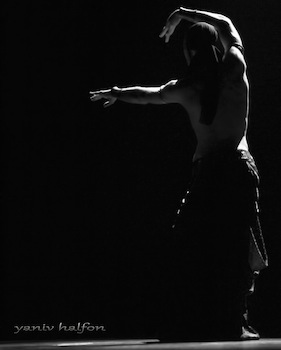
I recently encountered a cultural dance form that I found both challenging and with further study hypnotically beautiful. In America, this cultural presentation is a form of dance going under the label of Tribal Fusion, but a simpler description would be costumed male belly dance. 


                                     Photo: Horus Mozarabe, Tribal Fusion belly dancer

As a Romanian commentator, the Roma and Sinti part of my heritage responds to the romantic and exotic notions of the Lebanese, Turkish, Roma and Egyptian belly dance, particularly the athletic, the aesthetic and the sexual presentation of the performer's body framed by the costuming, accessories and escalating rhythms of the music. Whilst it is a popular misconception that belly dancing originated as the advertising foreplay of prostitution, the personal domestic and public presentations of belly dancing clearly, all involve a celebratory dynamic of sexual display. 


                                 Photo: Zadiel, Zenne belly dancer


The transpositions of the dance moves and the costumes to male performers appears on surface to be simply an extension of gay subcultures appropriation and mainstream dance culture, like vogueing. However, on closer inspection, despite Tribal Fusion's relatively recent origins in 1960s Californian Renaissance Fairs, seems to be much older and more complicated. 

Middle Eastern countries are not noted for their tolerance of homosexual culture. Yet, in Ottoman Turkey, particularly under the Ataturk period, male belly dancers were as common as female ones, if not slightly more prevalent. It appears, that the zenne dancer, a man who dressed as a woman, and danced for the titillation of predominantly male crowds has a long and complex cultural tradition, which nearly died out by the 1960s. Whilst not exactly inhabiting gay culture as we understand it, zenne dancing appears to inhabit a submissive niche for a dominant, penetrative elite. Whereas neither parts would describe themselves as homosexual, the zenne dancer performed a feminine role, which by definition of the Ataturk culture was a submissive and titillating role. 


In recent years, as a result of Caner Alper and Mehmet Binay's Turkish film "Zenne Dancer", on one hand, and american Tribal Fusion on the other, male belly dancing has undergone a cultural renaissance. In the face of religious fundamentalism in the region it appears to have shed its submissive dynamic, and it's now being performed as an assertive and defiant act by citizens, using it as a means of personal aesthetic and celebratory self esteem. 

Interestingly, just to add cultural confusion it's an aesthetic form which is now embraced by the heterosexual community, as well as the homosexual community.  And its resurgence it's possibly responsible for other similar displays in parallel art forms, such as the Bulgarian performer Azis, who's pop diva, lady-man performances have found inexplicable commercial success, in traditionally homophobic Bulgaria. 


Coming from a culture with a strong tradition of community dance, and living now in a culture with a more inhibited sense of dance I find the mutations evident in Tribal Fusion utterly fascinating. And I leave you the following links to make your own mind up, to introduce you to this cultural form of expression. 


Horus Mozarabe performing Tribal Fusion Belly Dance


Zenne Segah performing Turkish Belly Dance


Rachid Alexander performing Oriental Belly Dance


Bulgarian Chalga singer Azis 


Thursday, 1 October 2015

Being Batman By Laura A. Munteanu

It's difficult sometimes, to feel that I fit into this world I find myself in. And whilst it's true, but I'm not entirely sure what I'm looking for, it's equally true that I'm not entirely sure if I want what I've found. In the fireside tales of my distant youth I learnt about all sorts of complicated solutions to difficult problems, that involved turning yourself into an animal. A bird to fly over a high wall, a fish to swim to the bottom of the lake, a wolf to run through the strange forestland. I appreciate that these stories are probably just metaphors, prosaic descriptions of powerless people fantasising the subversion against the injustice of the authority figures that routinely crushed their aspirations. Those stories however planted a simple seed deep in my soul. A seed that has secretly grown that has infected my whole personality.

They used to say in my country that I have my head in the clouds. People would come up behind me and surprise me and tell me to wake up, making the jump for their amusement from my introspection. I used to be scared of the dark, imagining all the creaking noises that surrounded me in the dark were the sounds of claws scraping across the linoleum around my bed. Imagination can be an expensive problem if you are born into poverty or you find yourself in its arms. Nobody cares what the poor woman dreams, what shape she would like her community to take. And like the heroine in a Romanian folk story I packed my possessions into a small suitcase and sought my fortune in a foreign land. Whilst the road was hard, paved with scorn, mockery, dismissal or obstructions, I finally began to take some control over the direction of my life. And all the time through my years of struggle a little voice inside me urged me to ignore the scorn, the mockery and the folly of the fools around me, and to put myself in a position where my dreams could begin to make a difference.

This week, I found myself in Brighton, on the south coast of England, unexpectedly bracing itself for the invasion of thousands of Socialists for the Labour Party Annual Conference. Coming from a Communist country, Socialism is an ideology not entirely outside my experience, and compared with the divisiveness of conservativism, or the opportunism of liberalism is certainly closer to the colour of my political complexion. Having recently joined the party to deliberately support a left-wing leadership candidate I found myself somewhat isolated, at a very nervous conference, re-experiencing the changes the popular democracy brings. The moderate left-wing members of the party establishment were facing difficult decisions daily between their loyalty to the movement and their loyalty to their personal history of moderation. As a result, I found once you've fought past the desperate right-wing media scraping the streets of the stories that would damage the party's resurgence, the members of the party conference were either highly cautious not to express their opinion, or highly anxious to express their loyalty. Both positions being difficult for an outsider, a foreign outsider, to fully comprehend and navigate through. I should stress at this point that my loyalty to my new political party is unshaken. The message our new leader has projected is the direction I dream of for political opposition, in this, my borrowed country. I would dream of such opposition in my own country, but that's another story. I must also say, however it was particularly difficult, disentangling the new from the old to find that the new is older than the old. Nontheless, my experience is best described by my encounter with Nathan.

In the euphoria following the leader's speech to conference, and following a particularly positive meeting defining the party's stance on the opposition to the changes proposed by the Conservatives to the membership of the Human Rights Act in the European Union, I stumbled out of the conference centre. My head was full of supportive, inclusive, socialist mantras. I'd nearly run out of money and I wasn't feeling particularly health-conscious. As I was heading back to the hotel I bumped into a homeless man, called Nathan reading George R.R. Martin's "A Storm Of Swords" in a very dim light, coming from the fish and chips shop next door. I bought him a cup of tea and some fish and chips and asked him to come and sit at the table and I'd like to hear his story. Nathan was surprised by my offer and quickly accepted. The man who sold me the fish and chips refused to let Nathan sit at the table, arguing he didn't buy any food. I told the man he just did. He replied it wasn't him it was me. To which I responded I bought the fish and chips with Nathan's money, because he thought that if he'd come in he wouldn't be served because he's too dirty. In the end, the man gave up and allowed Nathan to sit at the table, but only for as long as he's eating. Nathan is 34, he's been homeless since he was 23, and he's been on the list for four years with Brighton Council for a temporary accommodation. Every now and then he sleeps in a shelter, which he pays for, with the money he earns on the street from the generous members of the public. I've asked Nathan if he'd like me to help him, because as well as a hot drink and food we both agreed he could also do with a bath (he couldn't remember when was the last time he had one) and a good night sleep. He took my hands in his very cold hands and kissed them. So, I've called Brighton & Hove Council SOS line, who assured me they will be taking care of Nathan immediately. And whilst Nathan will probably have many more rough sleeping nights, at least tonight he won't.

When I arrived at my hotel I found the owner hovering in the foyer, who asked me how my day had been. His veneer of politeness vanished when I described my encounter with Nathan, his initial response being "Why doesn't he get a job, why is he sitting in front of a fish and chip shop, if not to inspire pity in people?"
Unfortunately, I got used to my Batman helmet by this time in the evening, and in my best vigilante voice I stared the hotel owner in the eyes and asked him "Common, would you ever give a homeless man a job, doing anything in your property empire?"
He replied, "Of course not. They don't want to work, these people. We're fed up of them coming here, begging in Brighton."
So I then added, "Well, I'm afraid you are the problem. Your refusal to make any accomodations to support your fellow human being is what creates this situation in the first place. If we dehumanise people we deprive them of any human rights, which means we allow any kind of atrocity to happen to them." And to his credit, he looked away and couldn't match my stare. I would like to say at this point, that as a true Robin Hood class worrier I punched him unconscious in the face, robbed his seif and redistributed his capital assets amongst the worthy poor. But we all know, that that transformation only happened in my head. I don't think I've changed the capitalist mind, but maybe I've made him reflect for a moment.

This story is not about how cool and altruistic I am. It's not about the Labour delegates queueing up for their fish and chips and ignoring the homeless man reading a book on the street. It's not even about why Nathan was homeless, or what made him fall through the cracks in the floorboard to find himself on the street. It's not even about how we deal with the vulnerable in the society. This story is about a really simple thing. The cafe owner didn't want the homeless man eating his fish and chips at his table. He didn't want to endanger his future wealth by serving a customer who paid money for the goods and services he was selling, for fear that that sale would restrict future sales. The narrowness and selfishness of that businessman's personal self-interest is what is wrong with our society. The marketplace unregulated, unrestricted does not provide enough resources for all to enjoy. Nathan doesn't just need somewhere to live. He needs counselling, medical attention, education, social support and eventually employment. A society that wastes the resource of its own population needs healing. And that is why sometimes it would be better if more of us pulled on the cape, and instead of just dreaming about the better world, did something about making the world better. Every gesture helps from picking up the litter to challenging racist or sexist abuse, to supporting the vulnerable, to just sitting down next to a stranger asking them if they're okay and if they would like a cup of tea. You don't need to be bitten by a radioactive spider to care about the people around you, even if they're not your family. And that's what the fight is about.


Sunday, 2 August 2015

O Nunta Feminista De Laura A. Munteanu

Am crescut intr-o societate patriarhala de un gust oarecum medieval. Prin gust medieval ma refer la faptul ca femeile au trei roluri fundamentale: sotie, curva si babornita. Sotia poarta copiii, gateste, face curatenie. Curva asigura sex distractiv pentru bani si babornita distribuie barfa. Nu mi-au placut nici unul dintre aceste roluri fundamentale si dupa ce barbatul ce speram ca va deveni printul meu, m-a respins la televiziunea nationala am ales in schimb sa-mi caut viitorul mai degraba prin a-mi exersa creierul decat prin asteptarile mele romantice. Traind intr-o cultura straina timp de 7 ani si invatand cum sa devin o Feminista precizez ca, desi variat in detalii minore, mitul patrimonial al casatoriei este la fel de preponderent cum era in Romania. Si totusi, in ambele culturi rata divortului sporeste, in ciuda grabei continue a noilor voluntari, ce spera ca parteneriatul lor va fi cel ce va dura. Trebuie sa precizez ca experienta mea amara ma indreapta sa consider notiunea de casatorie, ca nimic mai mult decat o supunere patriarhala de respect si ca o oportunitate pentru o orgie capitalista de exces. Indiferent de ce parteneriate am actual sau intentionez sa am, niciuna dintre aceste traditii nu imi umplu inima cu o bataie rapaita. Inteleg rostul unor asociatii mai apropiate din punct de vedere juridic pentru investitii in comun, cum ar fi detinerea de proprietate sau copii, dar nici una dintre acestea nu figureaza indeosebi in agenda mea momentan. Asadar, ce urmeaza este mai mult despre parteneriate si a face relatiile sa functioneze. Dar pe scurt, partenerul meu stie cat de norocos este sa ma aiba. Si eu stiu cat de norocoasa sunt sa-l am si nu dau un cacat pe ce crede restul lumii.

Aceasta lucrare a avut doi parinti. Una fiind o lista cu cele 10 motive de ce casatoriile esueaza si cealalta fiind o lista cu 10 feluri in care sa-ti faci nunta sa se potriveasca cu perspectivele tale politice in egalitatea de gen. Deci, aceasta este lista mea cu cele 10 feluri de a supravietui un parteneriat, ca o Feminista/Feminist.

1. Asigura-te ca partenerul tau intentionat este interesant pentru tine. Si ca poti continua sa fi interesant/a pentru ei. Asta nu inseamna ca trebuie sa fiti amandoi din aceeasi clasa, etnie, cultura, sex, aliniere politica, religie. Inseamna doar ca amandoi aveti ceva de spus si dorinta de a asculta ce spune celalalt majoritatea timpului.

2. Casatoria si traditia parteneriatului pe termen lung a fost infiintata pe necesitatea de a asigura ca plodul ce rezulta din uniune a fost intr-adevar un produs al uniunii. Dateaza dintr-o perioada inaintea testelor ADN. Si totusi, al treilea cel mai comun motiv de ce casatoriile esueaza este infidelitatea si plictiseala sexuala. Multi oameni ar fi de acord ca sexul, ca orice alta activitate sexuala este ceva ce poate fi dezvoltat in circumstante contextuale diferite. Si probabil ca nu este o asteptare realistica, avand in vedere incidentele mari de infidelitate ce parteneriatele monogame vor trebui sa suporte individul pentru perioade de 30-40 de ani. Poate ca o accentuare mai mare pe comunicare, sinceritate si deschidere va permite cuplurilor sa se confrunte cu necesitatea infidelitatii, poate chiar a o primi ca o oportunitate de structura sa-si reinnoiasca angajamentele. Sau sa-si adauge noi elemente sa alunge plictiseala si uratul.

3. Nu este o asteptare realistica sa astepti ca familia unei parti de parteneriat sa plateasca pentru sarbatorire. Nu ar fi mai bine ca mirele si mireasa sa plateasca pentru sarbatorire si apoi sa accepte daruri de la invitati, ce doresc sa sarbatoreasca uniunea lor?

4. Cu privire la administrarea financiara as recomanda urmatoarele:
    - un cont comun pentru impartit de costuri, contributii depozitate dintr-o parte proportionala a venitului individual.
   - cand costul total al facturii este calculat, inaintea infiintarii ordinului de plata, recomand ca amandoi partenerii sa detina conturi private, ce le apartine de care sa se foloseasca.
   - daca finantele sunt sanatoase, o abordare asemanatoare a unui cont de economisiri este recomandat. Acest sistem presupune ca amandoi partenerii lucreaza.

5. Schimbarea numelui este o alegere personala. Nu m-ar deranja sa adaug numele unui partener numelui meu, dar nu as vrea sa renunt la al meu. Orisicum, adoptarea a noi nume maritale, pentru amandoi partenerii poate fi considerata un avantaj in cazul in care unul sau amandoi partenerii datoreaza sume considerabile de bani, dinaintea casatoriei lor. O schimbare de nume si exercitarea dreptului lui google de a fi uitat ofera oportunitatea unui inceput nou.

6. Nu este esential, cu grija chiar sa ai un parteneriat pe termen lung. Este posibil sa ai o existenta satisfacatoare, ca o persoana singura, posibil chiar a merge in punctul de a te casatori oficial cu tine si de a avea o ceremonie de a sarbatori faptul ca nu te vei casatori niciodata. Desi, in aceste circumstante este probabil o optiune, recomandata doar pentru oameni cu peste 2000 de prieteni pe lista lor de Facebook, dintre care 1800 sunt cunoscuti ca prieteni.

7. Unul dintre motivele mari pentru a avea parteneriate pe termen lung este abilitatea de a impartasi costuri pentru obiectele scumpe ale vietii, cum ar fi masina, case si calatorii promiscue in strainatate. Totodata, costul exorbitant al proprietatii momentan, mai ales in UK este dificil, chiar si cu un partener bogat. Avand in vedere ca nesiguranta financiara este unul dintre motivele majore pentru mariaje esuate, nu este recomandat un motiv suficient pentru a forma un parteneriat. Calatoritul in strainatate sau achizitionarea de mijloace de transport se pare ca este un motiv destul de bun. Si totusi, daca acesta este motivul pentru asociere, de ce sa te restrangi la un singur partener?

8. A avea copii este un motiv bun de a forma parteneriate cu angajamente stabile, in sensul ca, copiii raspund mai bine si se dezvolta mai bine cu parinti participatori, cultivatori. Totodata, studii recente sugereaza ca variatia genetica are o contributie pozitiva pentru bio-diversitatea omenirii. Deci posibil, ar trebui sa consideram cate un copil per partener. Un exemplu ce pare sa fie norma in UK. Nimeni nu planuieste sa aiba parteneriate multiple cu copii, dar tinand cont ca ambii parinti raman activi ca parinti, nu ar fi problematic. Mii de oameni formeaza unitati familiare efective cu parteneri multiplii, parteneri vitregi, copii si copii vitregi. Si desi asta face munca genealogistilor un pic mai grea, aceste parteneriate pot functiona.

9. Este usor sa-ti versi nervii si sa critici si este mai greu sa fi generos si sprijinitor. Un pas bun catre drumul mai greu este a invata sa asculti si sa realizezi cand cineva vrea sa-ti spuna cacatul lor ca acela este cel mai important lucru in mintea lor in acel moment. Si a fi acolo pentru ei in timp ce se descarca este lucrul important. O comunicare buna este despre deschidere, sinceritate si a fi capabil sa asculti efectiv.

10. Singurul sfat final ce-l pot oferi parteneriatelor de succes este sa recunoasca cand asteptarile lor sunt realistice. In tara mea nativa asteptarile nerealistice sunt lipiciul ce uneste parteneri nepotriviti impreuna, in relatii de nefericire inspaimantatoare. Cand partenerul tau sugereaza entuziast ca vrea sa sparga bugetul vacantei acestui an sa mearga sa vada Formula 1 la Silverstone si nu sunt suficienti bani in pusculita sa cumpere un bilet si pentru tine, este improbabil ca anul viitor i-ar face placere sa zboare cu tine la Rio la carnaval. Este important sa te uiti in ochii partenerului tau si sa ai asteptari realistice de ce este posibil. Cand intalnesti o persoana pentru prima oara, golful dintre asteptarile si realitatea pe care o intampini poate fi grozav. Cateodata pentru mai bine, cateodata pentru mai rau. Pentru ca nu cunosti cu adevarat acea persoana. Daca totusi, ai impartasit o camera si un cont in banca cu cineva timp de 7 ani abilitatea lor sa te surprinda mai bine sau mai rau este relativ minimala, daca i-ai ascultat cu atentie. Si daca ai fost cu cineva timp de 7 ani lucrul corect de facut nu este sa-i cicalesti ca nu sunt un print tanar, musculos si romantic sau o printesa cu forme si calitati ideale, ci mai degraba sa-i incurajezi sa accepte promovarea aceea la servici sau sa-i ajuti sa planuiasca un raspuns pentru sefii lor hartuitori sau sa te duci sa usuci vasele cand ei le spala, in loc sa te uiti la programul tau tv preferat. Des, este despre a face cealalta persoana sa simta ca, fiind o persoana minunata in sine, de asemenea fiind cu tine adauga valoare ambelor voastre vieti. Si asta este totul. Si cine plateste pentru flori sau tort este irelevant, cand amandoi sunteti capabili de a creste sau sa va coaceti singuri.

Observati ca in descrierea nuntei mele feministe nu am vorbit despre nimic legat de ceremonii. Tot ce v-as spune este intrebati-va partenerii ce vor. Acesta este punctul de inceput si aceasta este singura regula ce conteaza.